


When brown marmorated stink bugs first showed up in Sacramento, they gathered in such numbers that people reportedly cleared them away with manure shovels and five-gallon buckets. These invaders from Asia are still around, and every fall they look for a way inside.
They aren't a health risk. But they tend to arrive in groups and release a strong odor when disturbed or crushed.
At Black Sheep Pest Protection, we help Roseville homeowners keep stink bugs outside every fall.
Where Did Stink Bugs Come From?
Brown marmorated stink bugs are native to China, Japan, and Korea. According to UC Cooperative Extension, they were first documented in the United States in Pennsylvania in 2001 and have been spreading ever since.
That spread reached California thirteen years ago, and the Sacramento area has been dealing with them ever since. Roseville is just up the road, so plenty of local homes end up on their fall route.
They hitch rides in vehicles, furniture, and other belongings when people move, and they can fly up to half a mile at a time, which is why new infestations tend to show up fast.
How Can You Tell It's a Brown Marmorated Stink Bug?
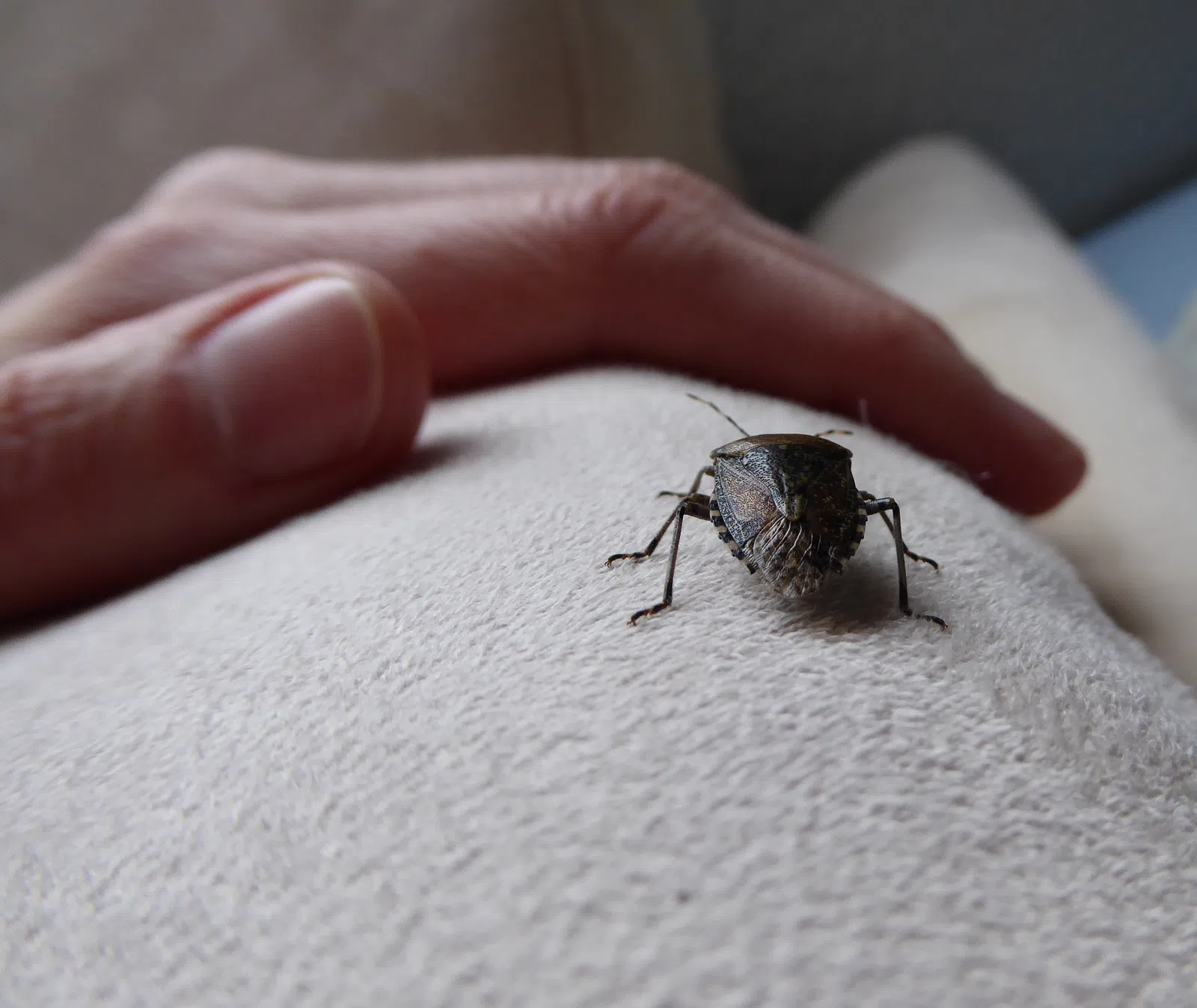
Several native stink bugs live in California too, so it helps to know the invader. UC Cooperative Extension lists a few telltale features:
- It's larger than most ordinary brown stink bugs, with a flat, shield-shaped body.
- Its back has a mottled, marble-like pattern, which is where the name "marmorated" comes from.
- Its antennae and legs have distinctive white bands.
- The edge of its abdomen sticks out past its wings and shows alternating white markings.
Why Do Stink Bugs Move Into Homes in the Fall?
They're looking for a warm, protected place to wait out winter. The National Pest Management Association calls fall prime time for stink bug invasions, since cooler temperatures send them hunting for shelter, and our homes offer exactly what they need.
They don't usually tunnel in. They slip through small gaps that most of us never notice. The NPMA lists the usual entry points:
- Cracks and crevices around siding and foundations
- Gaps around utility pipes, window frames, and door frames
- Openings behind chimneys and underneath wood fascia boards
Once inside, they settle into wall voids and attics, then wander out on warm winter days. That's why they seem to appear out of nowhere in January, crawling toward sunny windows.
Are Stink Bugs Dangerous?
Not to people. The NPMA notes they don't pose direct health risks to humans. Their real talent is the smell. When they're disturbed or crushed, they release a strong, unpleasant odor as a defense.
They're a bigger problem for the garden than for the house. UC Cooperative Extension reports that they feed on dozens of California crops, from tomatoes and berries to peaches and grapes. If your backyard tomatoes look pocked and dimpled this year, stink bugs may be part of the story.
How Do You Keep Stink Bugs Out of Your House?
Prevention does most of the heavy lifting here, and the best time to start is before they settle in. The NPMA recommends a few simple steps:
- Seal cracks and gaps around windows, doors, siding, and utility lines with caulk
- Check window and door screens for holes, and patch or replace damaged ones
- Keep exterior lighting to a minimum, since lights can draw insects toward the house
- Fix leaks and moisture buildup around the home
- Keep branches and shrubs trimmed back from the walls and roofline
If a few stink bugs make it inside, resist the urge to squish them. Gently scoop them into a cup and toss them outside, or vacuum them up and empty the canister outdoors right away so the smell doesn't stick around.
When Should You Call Black Sheep Pest Protection?
A stray stink bug on the curtains is just part of the fall around here. Dozens on the siding, or a steady stream of them inside every sunny afternoon, means they've found a way in.
The NPMA also points out that stink bugs are easy to confuse with other insects, and the wrong treatment can make the problem worse, so a correct ID matters before anyone starts spraying.
Here's what to expect when we come out:
- Your technician inspects the outside of your home to find where stink bugs are gathering and the gaps they're using to get in.
- We treat the exterior at the source with kid- and pet-friendly products and point out entry points worth sealing.
- Recurring plans include a warranty between services, so if stink bugs keep showing up between visits, we come back.
We're locally owned and family-run, and you'll see the same technician every time.
Stink Bug Control in Greater Roseville
Stink bugs are a fall tradition nobody asked for, but they don't have to take over your windows. If they've moved in, or you'd like to get ahead of them before winter, call us. Request your free estimate, or call 916-580-5451, and we'll help protect your flock this season.